Ground Covers: Seasonal Plant Lesson

Grow Food, Make Food, Share Food

Jul 15, 2025 | Grow Food

Aloe and Wood Sorrel

Seasonal Plant Lesson: GROUND COVERS

Created for 6/25/25, edited March 2025 for Open Farm Day, led by August

Objective: Discuss the purpose of ground covers in the farm ecosystem and define the benefits for the Skyfarm. Review previous successes and failures of ground covers and how they can be utilized to protect soil microbiome. Currently we steward purslane, yellow moon primrose, frogfruit, wood sorrel, dichondra and clover.

Duration: 1 hour

Introduction (15 minutes)
What is a ground cover: Ground covers are various plants that typically grow low to the ground and spread outward. While you can select and buy seed for ground covers in your farm and garden, we encourage you to learn the offers of the land you keep and see if any of the plants there can be utilized as ground cover. Many ground covers that are locally occurring are native and have additional benefits for the space.
● Benefits of ground covers include: preventing soil erosion, aiding in nutrient cycling, sequester weed growth i.e. allelopathy, ground cover hosts soil microbiome, providing resources for pollinators/bringing pollinators for their services to crops, support beneficial insect predators who will eat farm pests, creates habitat. On the Skyfarm, our ground covers are also helpful in providing the humidity and protection from the sun that many seedlings need before they get well established for the season.

Cover Crops on the Skyfarm (20 minutes)
● Qualities to look for: Consider your site. For the Skyfarm, soil compaction is not an issue because of depth. The soil is lightweight and low in organic matter which means it does not hold moisture. At this height and location, the farm receives a significant amount of wind and sunlight; soil erosion is a concern. How can we create healthy soil with ground covers?

○ Add organic matter/create a nutrient cycle
○ Preventing soil erosion
○ Protect the soil from the sun
○ Discourage weed seed germination

● Diversity: A monoculture of any kind will be more susceptible to diseases. It is important to observe how different ground covers interact with the space in order to optimize the health of the ecosystem. What ground covers grow during what times of year, how much water do they all need, how do they interact with each other and your cultivated plants?
On the Skyfarm, we encourage the ground covers purslane, wood sorrel, clover, yellow moon primrose, and frogfruit. Some of these plants are edible and even medicinal.

● Spreading Seed: As you wait for the cover crops to grow in and become well established, you can occasionally mow them down, especially as they begin to produce seeds. This will ensure that their seeds are spread evenly throughout the area you are working with and will reduce your labor input.

Hands On (20 minutes)
● Field Activity: Take the group out to the farm to look at the different niches of the farm that host the ground covers and discuss how they came to be here.

Q&A and Interactive Discussion (10 minutes)
Encourage participants to share their experiences with growing ground covers and address any questions or concerns of the group.
Materials Needed: none
Outcome: Participants will leave with an in-depth understanding of the benefits of ground cover and how to incorporate them into their garden spaces.

Check out some of our seasonal recipes.
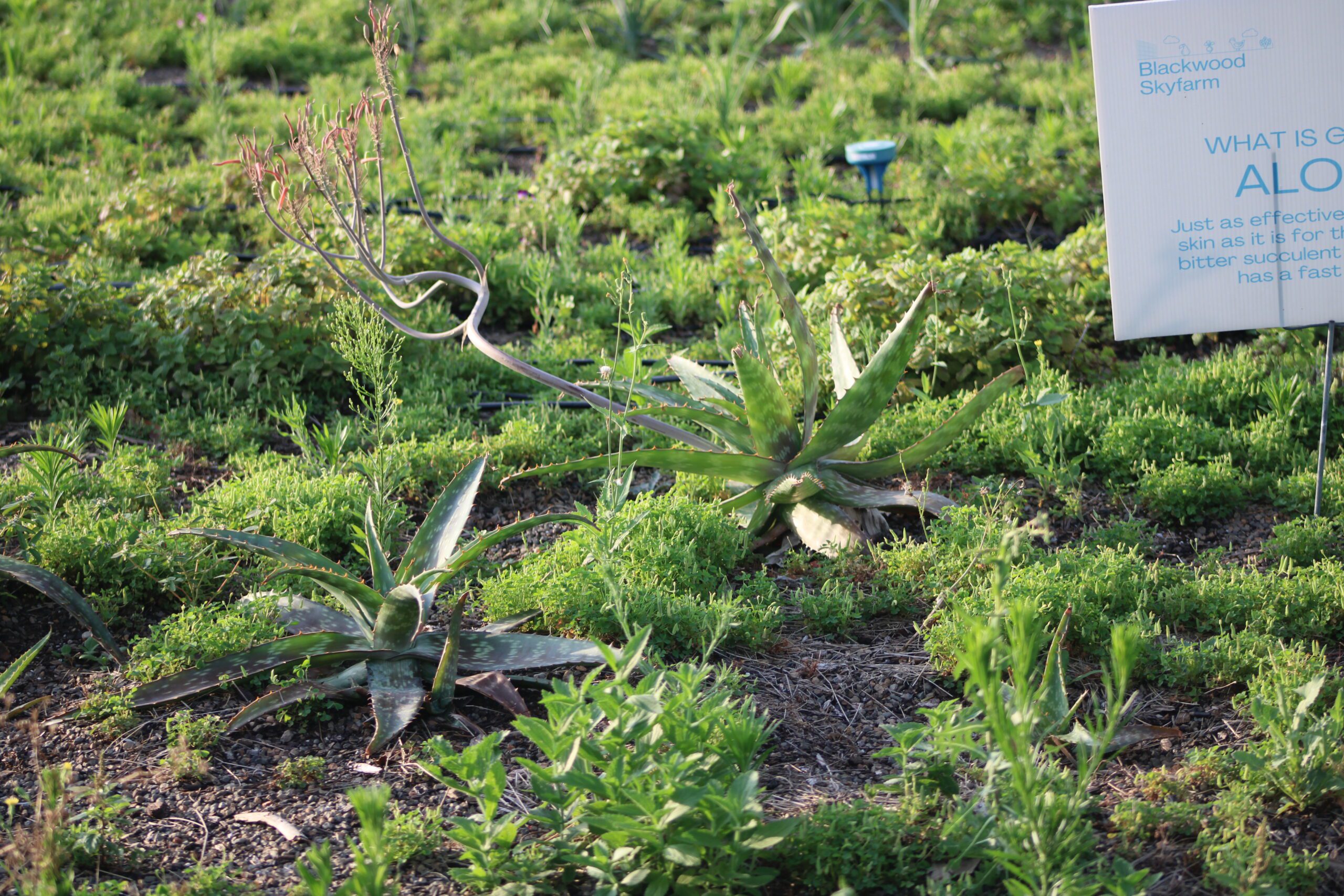
Aloe and Wood Sorrel
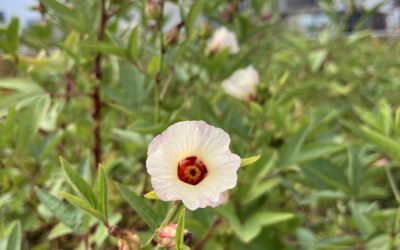
Seasonal Plant Lesson: Roselle (Hibiscus)

Seasonal Plant Lesson: Roselle (Hibiscus)

  Seasonal Plant Lesson: ROSELLE HIBISCUS Created for 3/13/24 Open Farm Day, edited 5/7/25, led by August Lesson PlanObjective: Discuss the benefits of roselle and the different ways in which it can be utilized, depending on harvest time. Highlight the various ways to...

Farmer’s Perspective: April 2025

Farmer’s Perspective: April 2025

Farmer’s Perspective: April 2025 Spring has come to us in Houston, lush and green as ever. At the Skyfarm, the fields bloom with all kinds of native wildflowers and medicinal plants alongside our cultivatedcrops. The thyme and chives bloom as the first round of...

Seasonal Plant Lesson: Cilantro

Seasonal Plant Lesson: Cilantro

Seasonal Plant Lesson: CILANTRO Created for 3/13/24 Open Farm Day, edited 4/2/25, led by August Lesson PlanObjective: Discuss the benefits of cilantro and the different ways in which it can be utilized, depending on harvest time. Highlight the various ways to consume...

Spring Slaw: Great on Tacos!

Spring Slaw: Great on Tacos!

This spring and summer cabbage slaw is colorful, crunchy and healthy and to top it off, it's super easy and quick to make! Ingredients 1 head of cabbage1 bunch of parsley or other herbs (cilantro, dill, chives)1 lemon1/2 orange1/2 tablespoon garlic powder (or fresh...

How We Grow: Regenerative Farming

How We Grow: Regenerative Farming

Regenerative Farming Author: Sar Yashinskie At Blackwood, we are strong advocates of regenerative agriculture. At our Land Farm in Hempstead, we are actively working toward Regenified Certification. Regenified is a certifying agency that establishes a clear baseline...

Farmer’s Perspective: February 2025

Farmer’s Perspective: February 2025

Farmer’s Perspective Author: August Stubler, Skyfarm Farmer In early February at the Skyfarm, we hosted a group of delightful students from the School of the Woods who volunteered as part of their service week. Together, we planted seeds for radishes, swiss chard,...

Seasonal Plant Lesson: Swiss Chard

Seasonal Plant Lesson: Swiss Chard

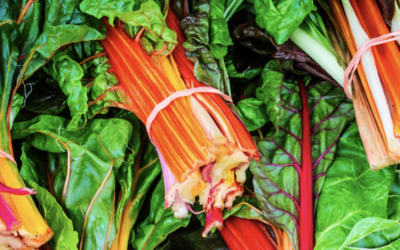
Seasonal Plant Lesson: Swiss Chard Created for 2/12/25 Open Farm Day, led by August. Lesson PlanObjective: Discuss the benefits of swiss chard in a garden and the different ways in which the plant can be utilized. Highlight the various plant partnerships to optimize...

Seasonal Plant Lesson: Radishes

Seasonal Plant Lesson: Radishes

Seasonal Plant Lesson: Radishes Created for 1/22/25 Open Farm Day, led by August.Rescheduled for winter weather to 1/29/25 Lesson PlanObjective: Discuss the benefits of radishes in a garden and the different ways in which the plant can be utilized. Highlight the...

Events that Connect – Community, Food and Storytelling

Events that Connect – Community, Food and Storytelling

Food brings people together and at Blackwood we know how culture is rooted in food and food is rooted in culture. Stories sparkle around the dinner table and shared memories are a glimpse into the life of the storyteller. Food can bring families together and also...

Blackwood Cucamelon and Cucumber Salad

Blackwood Cucamelon and Cucumber Salad

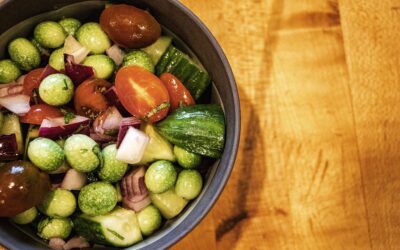
Ingredients 1 Blackwood cucumber, peeled and quartered8 - 10 Blackwood cucamelons10 cherry tomatoes, sliced in half½ red onion, diced1 tablespoon fresh Blackwood mint2 tablespoons extra virgin olive oil1 tablespoon sherry wine vinegar   Steps Combine all...

Scallops and Blackwood Fennel

Scallops and Blackwood Fennel

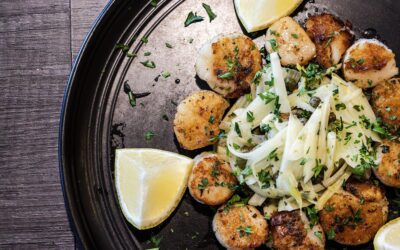
Ingredients 2 tablespoons butter1 Blackwood fennel bulb2 tablespoons drained capers½ lemon juiced2 tablespoons chopped Blackwood parsley1 tablespoon avocado oil1 pound sea scallops   Steps Trim fennel, cut in half and slice thinly. Melt butter in a cast iron...